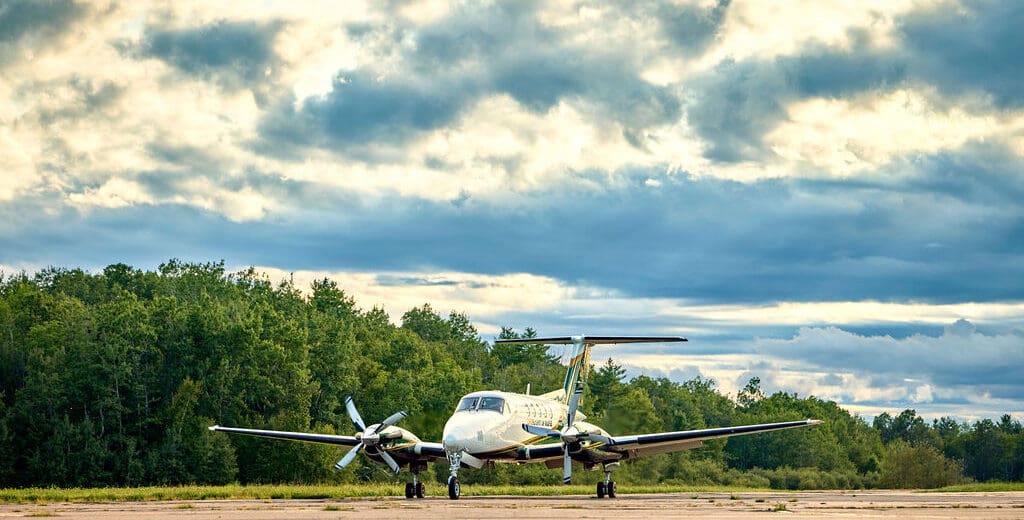
A plane for Maine.
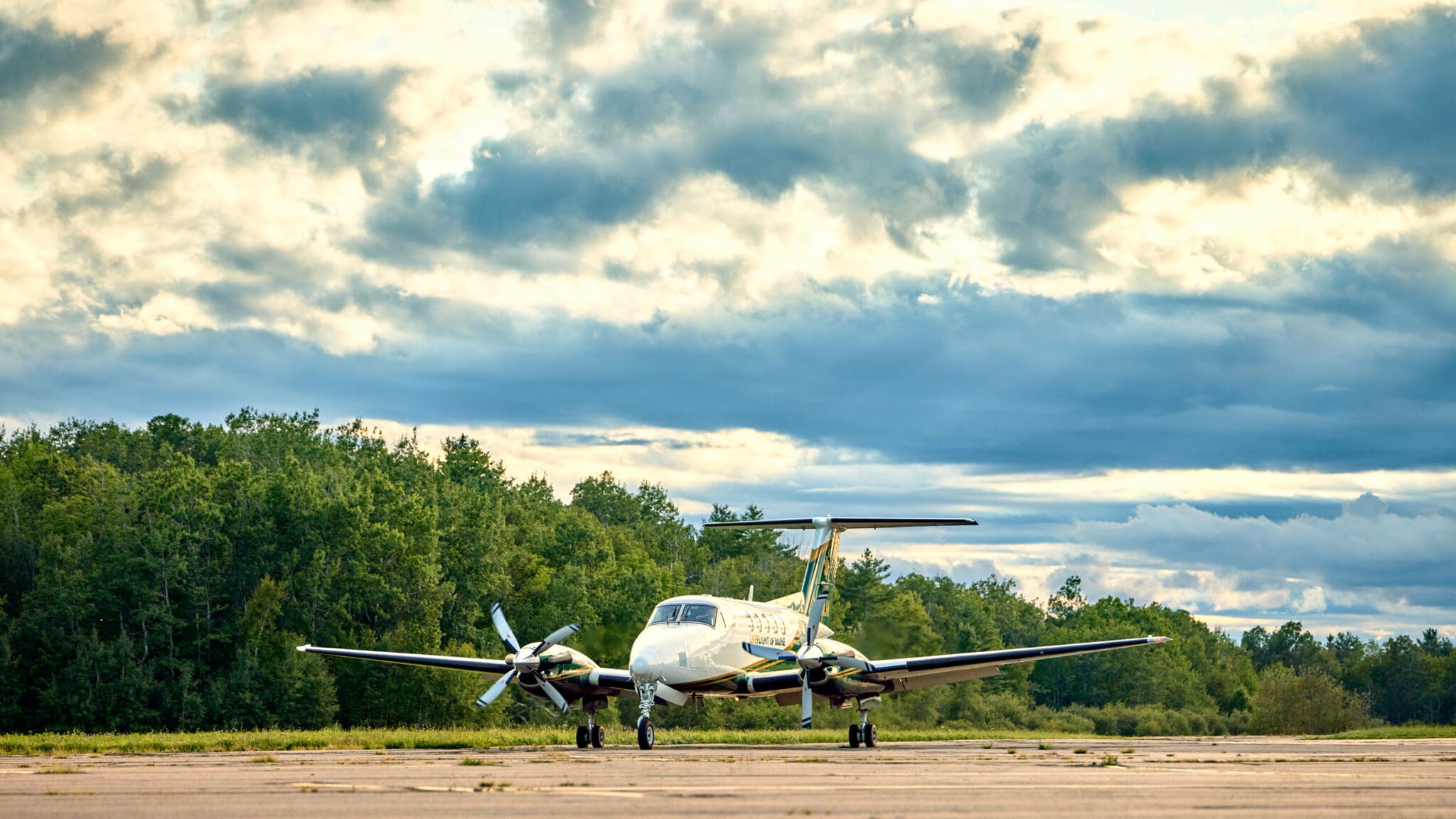
A Plane for Maine.
We need your help to upgrade and expand LifeFlight’s fleet.
LifeFlight’s commitment to Maine is to provide access to the best care possible for every person who lives in or visits our great state. But given Maine’s size, rural and remote population, and fickle weather patterns, making that happen is complicated.
It requires a fleet that offers multiple modes of transport, all equipped with the best possible medical and aviation equipment to allow us to reach patients every day and night of the year, and to do so safely.
The summer of 2025 was LifeFlight’s busiest on record – with the crew averaging one transport every two and a half hours.
Lima Mike: LifeFlight’s Workhorse
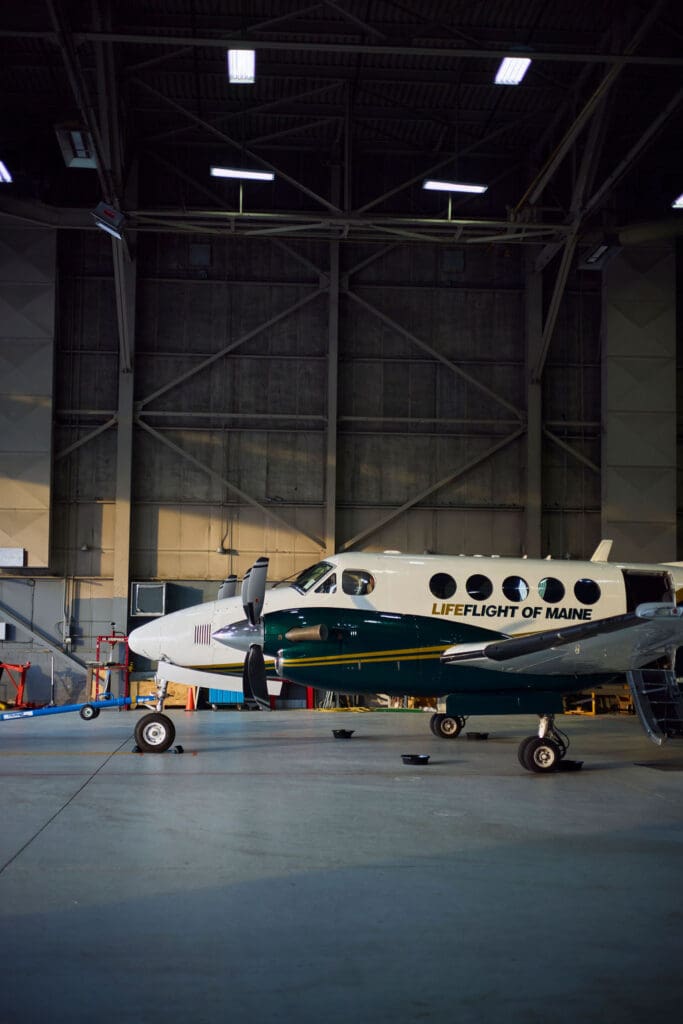
Since 2015, LifeFlight’s workhorse airplane, Lima Mike, has been an incredibly important component of the fleet. Low visibility due to fog, multiple day rain events, and icing conditions are common occurrences. There are many days out of the year where weather has the helicopter fleet grounded and the airplane is the only asset flying. In addition to its weather capabilities, the airplane flies twice as fast as the helicopter and is more suitable for longer range transports. Like all of our aircraft and ambulances, our airplane is equipped as a mobile ICU.
When do you use the airplane?
The airplane is used for transports greater than 150 miles, for interstate specialty care not available in Maine, and during winter months when it is often the only asset able to fly. By hours flown, it is the most utilized aircraft in LifeFlight’s fleet. However, operating only one airplane no longer provides the level of reliability Maine patients require.
In summary, the LifeFlight airplane provides the following:
1. The capability to fly longer distances, at twice the speed, compared to a helicopter.
2. The capability to fly in weather that keeps helicopters grounded.
3. Keeps the helicopter fleet available to perform transports for which they are ideally suited.
4. Adds surge capacity to LifeFlight’s transport/emergency response system.
Technology has changed rapidly in the last 11 years and having flown more miles than any other single LifeFlight asset, LifeFlight’s airplane is reaching significant longevity milestones that will require an extensive $1,500,000 overhaul and upgrade.
When minutes matter, LifeFlight gives patients their best chance on their worst day. Ultimately, this is not about planes – it’s about people. Without access to a plane, LifeFlight’s ability to reach and care for Maine’s critically ill and injured patients is dramatically diminished.
Patient Stories
In the past ten years, LifeFlight’s plane has transported more than 2,900 patients. The calls for help come from every corner of the state, from Bridgton and Portland to Rangeley, Rockport, Presque Isle, Bar Harbor, Fort Kent, Wells, and everywhere in between. So many Mainers have a LifeFlight story with one thing in common: every minute matters. The patient’s chances of survival and quality of life depend on LifeFlight’s ability to provide advanced care while safely traversing Maine’s vast expanse, rugged terrain, and challenging weather. In many cases, LifeFlight is the only option to connect Mainers quickly and safely to the care they need.

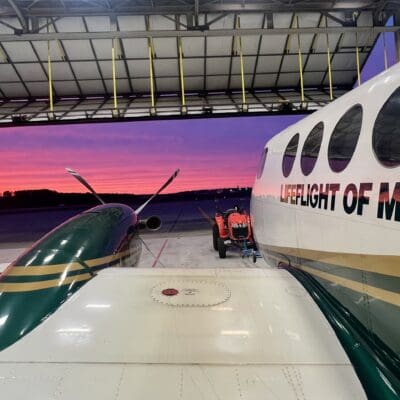
Why do you need a second plane?
Today, operating only one airplane no longer provides the level of reliability Maine patients require.
Right now, LifeFlight’s greatest need is a second airplane, as the current airplane cannot consistently meet demand, particularly during winter months and periods of increased requests. Clinical and operational analysis confirms that to provide reliable access to critical care statewide, a second medically equipped airplane is required. LifeFlight seeks to add a used Beechcraft KingAir B250 as a complementary asset to the fleet, one that reduces out-of-service gaps, increases availability during high-demand periods, and preserves helicopter capacity for the communities they are best suited to serve.
The new plane will be a King Air 250, which are the most extensively used airplanes for medical transport in the United States and worldwide, and are purposely designed to support air ambulance missions. The biggest benefit of the King Air is its ability for flight into known icing conditions. When these conditions exist, transport requests can back up because the airplane is the only asset in the air. The airplane can safely fit roughly 3 patient transports in a single flight shift.
The King Air can hold up to 4 hours of fuel with a range of up to 1,500 miles. A second airplane will keep an asset available in the state while we accomplish longer transports.
How much will a plane cost?
LifeFlight of Maine is undertaking a carefully structured financing plan to support the acquisition of a second medically equipped fixed-wing aircraft that will strengthen reliable access to critical care across the state. The total project cost is $7.0 million, reflecting the purchase, medical configuration, and entry-into-service costs for a King Air B250 aircraft.
The LifeFlight Foundation is seeking $3.5 million in philanthropic support from donors and foundations to help fund this capital investment. Philanthropic dollars will be applied directly to the aircraft acquisition and medical interior configuration, ensuring that donor support has an immediate and lasting impact on patient access, safety, and service reliability.
The remaining $3.5 million will be funded through a combination of internal and external resources, demonstrating LifeFlight’s shared commitment to the project. This blended funding approach reflects careful stewardship of donor resources and ensures that philanthropic investment is leveraged alongside organizational assets and operational capacity.
Support the plane.
If you or someone you know can help LifeFlight secure the funding we need to upgrade and expand our fleet, please contact Kate O’Halloran, the Foundation’s Executive Director at 207.314.5230 or kohalloran@lifeflight.me.
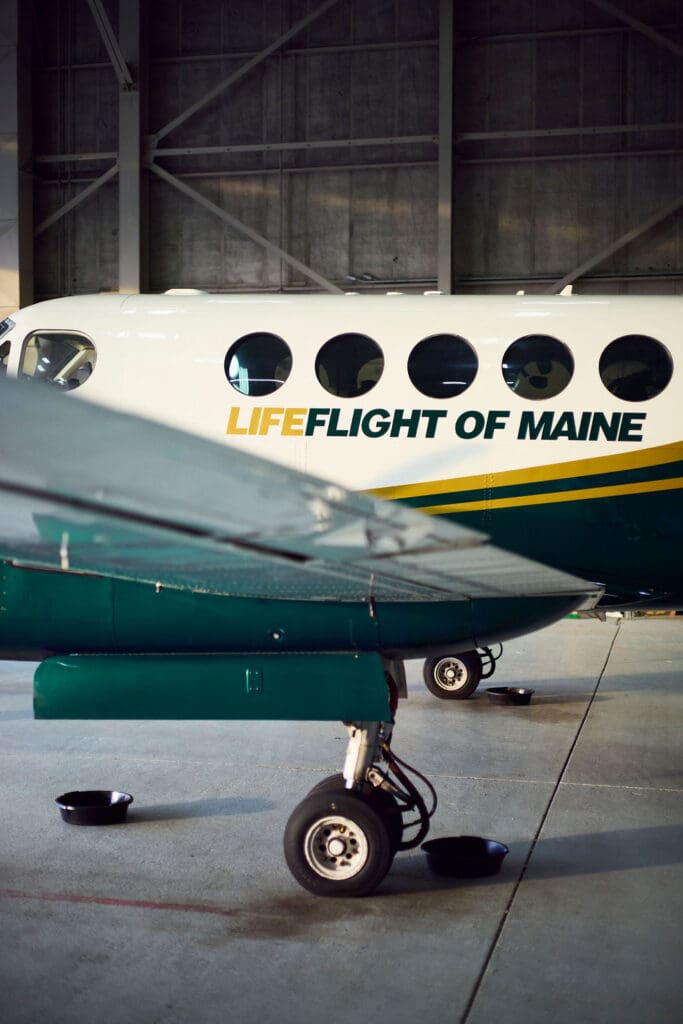
Get involved.
Stay up-to-date as we get this initiative off the ground. Hear about opportunities to learn more, meet our crew, and ways you can help.